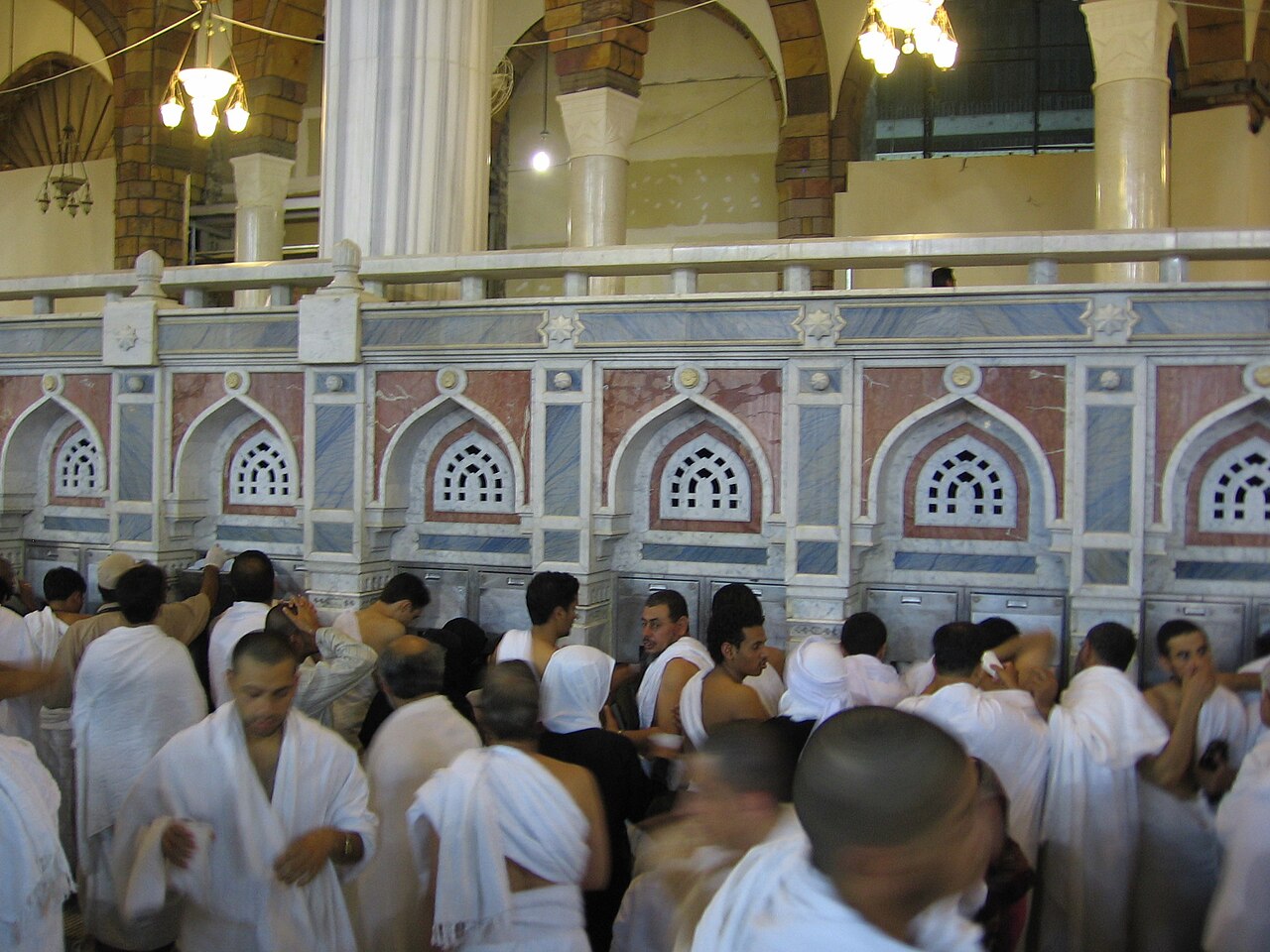
Zamzam is a blessed water rooted in the story of Hajar and Ismail. Learn its merit and the etiquette of drinking it.
Zamzam water flows from a well near the Ka'bah, within the Masjid al-Haram complex. Its history began with the story of Hajar, the wife of Prophet Ibrahim, and their infant son Ismail. Left in a barren valley by Allah's command, Hajar hurried back and forth between the hills of Safa and Marwah searching for water, until Zamzam gushed forth near Ismail. This event is commemorated in the rite of sa'i.
Zamzam water holds a special merit. In a well-known hadith, the Prophet (peace be upon him) said that Zamzam water is for whatever it is drunk for. That is, whoever drinks it with a good intention, such as seeking a cure, knowledge, or blessing, may hope that Allah grants it. He also described Zamzam as a blessed water and a nourishing food.
Because of this merit, pilgrims are encouraged to drink Zamzam abundantly while in the holy land, and to supplicate earnestly as they drink.
Several points of etiquette are taught for drinking Zamzam. First, begin by saying "Bismillah." Second, drink while facing the qibla if possible. Third, drink in three breaths rather than all at once, breathing outside the vessel. Fourth, offer the prayer for the good you hope for, for this is the fitting moment to benefit from the merit of Zamzam.
Some scholars also mention drinking Zamzam to one's fill as an expression of faith in its blessing. Yet what matters most is a sincere intention and reliance upon Allah, not merely the amount of water consumed.
After returning home, many pilgrims bring Zamzam water as a gift for their families. Note the airline's rules on how much may be carried and how, so it does not complicate the journey. This water should be treated with respect and never wasted.
Bear in mind that the blessing of Zamzam comes from Allah, not because the water has any power independent of His will. Avoid unfounded beliefs and excessive practices. By understanding its history, merit, and etiquette, drinking Zamzam becomes a small yet meaningful act of worship, reminding us of Hajar's patience and Allah's mercy towards His servants.
Remarkably, the Zamzam well has been flowing for thousands of years without ever drying up, even though enormous amounts are drawn each day by millions of pilgrims. For a believer, this is a sign of Allah's greatness and proof of the promised blessing, not merely an ordinary natural phenomenon.
Besides drinking, some scholars mention the permissibility of using Zamzam to wash the face or body in the hope of blessing and healing. Yet it must be stressed again that a sincere intention and reliance upon Allah are the key, not the method or the amount of water. Avoid the notion that this water has a magical power independent of Allah's will.
Make use of Zamzam while in the holy land to improve the quality of your worship: drink before supplicating, intend the good you aspire to, then strive earnestly in effort and prayer after returning home.


